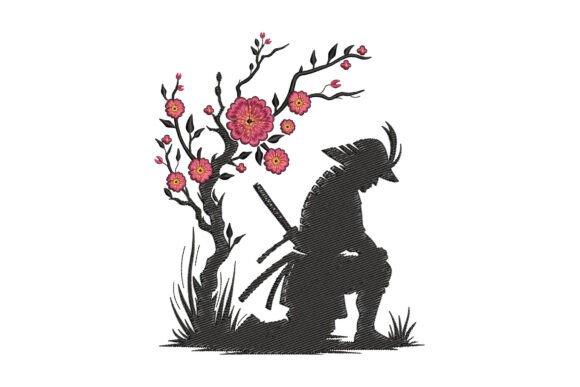
Review: Samurai Under Cherry Blossoms Embroidery Design
As a designer who spends more time staring at stitch maps than actual fabric, I have learned that not every machine embroidery design translates well from screen to hoop. When I first loaded the Samurai Under Cherry Blossoms file into my software, I was looking for more than just aesthetic appeal. I wanted to know if this piece could hold up under the scrutiny of a paying customer and the mechanical stress of high-speed stitching. This is not just a pretty picture; it is a potential asset for your craft business, and it deserves a thorough evaluation before you commit thread to fabric.
First Impressions and Visual Mood
The immediate impact of this design is its balance between strength and delicacy. The subject matter draws heavily from Asia inspired aesthetics, blending the rigid, honorable posture of a samurai with the soft, transient beauty of falling cherry blossoms. For an embroidery project, this contrast is crucial. If the design were too dense, it would lose the whimsical charm promised in the description. If it were too sparse, it might look unfinished on heavier fabrics.
Visually, the layout feels organic. The blossoms are not just background noise; they interact with the figure, creating a sense of movement. This is vital for items like a tote bag design or a pillow cover, where static images can feel flat. The design invites the viewer’s eye to travel across the hoop, which increases engagement. For Etsy sellers and handmade shop owners, this visual flow can be the difference between a browser scrolling past and a customer clicking "add to cart."
Real-World Application and Fabric Performance
To truly test the viability of Samurai Under Cherry Blossoms, I imagined several real-life production scenarios. The most obvious application is custom apparel. Picture this design stitched onto the left chest of a high-quality cotton sweatshirt. The satin stitch elements likely used for the samurai’s armor or sword hilt would provide a nice textural contrast against the fill stitch areas of the blossoms. However, one must be cautious with stretchy fabric. If you are applying this to a performance tee or a baby onesie, the density of the stitches must be managed carefully to prevent puckering.
Another strong candidate for this design is home decor, specifically pillow covers and kitchen towels. On a linen towel, the thread colors need to pop. I recommend testing this on both light and dark backgrounds. A white thread on a navy towel might get lost if the stitch density is not optimized for coverage. Conversely, on a personalized gift like a tote bag, the design serves as a standalone statement piece. It does not need additional text or embellishment, which simplifies the production process for small batch orders.
Challenges with Small Hoops and Curved Surfaces
While the design is versatile, it is not without its technical demands. If you plan to use this as an embroidered patch or on a cap, you must consider the hoop size. Detailed corners, such as the tips of the cherry blossom petals or the edges of the samurai’s helmet, can become distorted if the hoop is too small or if the fabric shifts during stitching. Curved surfaces like baseball caps require precise stabilization. Without a proper cut-away stabilizer, the intricate details of the Embroidery may pull or warp, ruining the crisp lines that give the design its professional look.
Furthermore, be mindful of textured fabrics. If you are stitching onto a heavy canvas or a waffle-weave towel, the tiny running stitch details might sink into the fabric texture. In such cases, increasing the stitch length slightly or using a thicker thread weight can help maintain visibility. Always test on scrap fabric first. This is non-negotiable for any serious commercial embroidery work.
Enhancing Brand Value and Customer Trust
For digital product sellers and creative entrepreneurs, the quality of your design assets reflects directly on your brand. Using a well-balanced design like Samurai Under Cherry Blossoms signals professionalism. It shows that you care about the final finished product, not just the speed of production. Customers can sense when a design has been rushed or poorly digitized. A clean, clear stitch path builds trust.
This design also offers excellent potential for printable mockup creation. Because the theme is distinct yet universally appealing, it works well in digital previews for holiday gifts or boutique branding. Whether you are selling the digital embroidery file itself or the physical item, the visual appeal drives buyer engagement. It fits seamlessly into collections focused on nature, history, or mindfulness, allowing for cohesive shop aesthetics.
Practical Designer Notes for Execution
Before you launch this design into your production line, consider these practical steps to ensure success:
- Check Thread Color Contrast: Ensure your palette distinguishes the samurai from the background blossoms. Monochromatic schemes can look sophisticated but require precise tension control.
- Review Stitch Density: High density can cause fabric stiffness. If using this on baby embroidery items, ensure the back of the stitch is smooth and not abrasive to sensitive skin.
- Confirm Licensing: If you are an Etsy seller or run a small shop, verify the license terms. Can you sell the finished items? Can you resell the file? Never assume; always check the provider’s terms.
- Test on Dark Fabric: Use a white or light-colored underlay if stitching on black or navy to prevent the base fabric from showing through the fill areas.
- Inspect Small Details: Zoom in on the digital preview. Are there any stray stitches or overly complex jumps that could cause thread breaks?
In conclusion, Samurai Under Cherry Blossoms is a robust choice for designers who value both artistic merit and technical feasibility. It bridges the gap between traditional motifs and modern application, making it suitable for a wide range of small shop products. By respecting the technical requirements of the design—proper stabilization, appropriate fabric selection, and careful color planning—you can create items that not only look beautiful but also stand the test of time and wear. This is what separates a hobbyist project from a professional handmade product.